LSU LEAVES FORMER NFL PLAYERS OFF OPENING ROSTER
LSU has left former NFL ‘players’ Dae’Quan Wright and Zxavian Harris off its roster for Saturday’s season opener against Clemson, stepping back from an immediate confrontation with the NCAA, SEC and its opening opponent.
The Tigers submitted a 103-player roster without either of the former Ole Miss pair, despite having secured a preliminary injunction that appeared to clear the way for both to return to college football. LSU is permitted to carry 105 players and Wright and Harris remain enrolled at the university, preserving the possibility that they could be added later in the season, but neither was expected to face Clemson even if included. Harris has not yet practiced with the Tigers, while Wright has reportedly participated in only two sessions since returning from the Cleveland Browns training camp.
Their omission nevertheless represents a tactical retreat after several days in which college football’s dispute over former professionals threatened to overwhelm one of the opening weekend’s leading games.
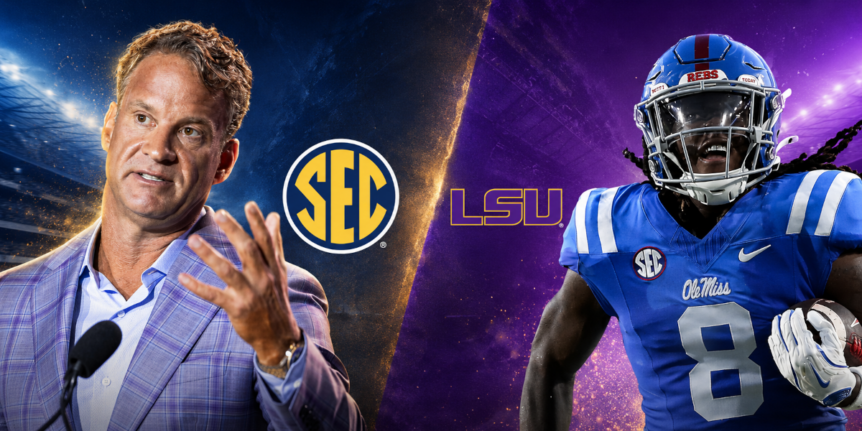
Wright and Harris played for new LSU head coach Lane Kiffin at Ole Miss last season before entering the NFL as undrafted free agents. Wright signed with Cleveland and dressed without playing during the Browns’ second preseason game, while Harris joined the New Orleans Saints. Both were waived during August. They subsequently joined a Louisiana lawsuit brought by 42 athletes seeking an additional college season following the NCAA’s introduction of its new five-year eligibility model.
Players who began their careers in 2022 argue that they should receive the same opportunity to compete for five seasons as athletes entering college under the revised system. Wright and Harris testified that they would not have signed NFL contracts had they known another college season might become available.
Judge William Jorden of Louisiana’s 19th Judicial District Court granted a preliminary injunction on Thursday preventing the NCAA and SEC from punishing the named athletes, or the schools that use them, while the case proceeds. The order did not deliver a final judgement upon their eligibility, but provides temporary protection against enforcement and applied only to the 42 plaintiffs rather than creating a general route back into college sport for every former professional. That protection appeared to permit LSU to add Wright and Harris before Friday’s roster deadline, although the SEC immediately made clear that it did not regard the argument as settled.
“The SEC’s presidents and chancellors unanimously adopted a clear and reasonable standard: member universities should not place former professional athletes on their rosters,” the conference said. “The SEC and its member universities have the right to establish, through agreed-upon governance procedures, the rules under which they voluntarily compete and to expect those rules to be followed. The SEC will continue to defend this standard, the principle of fair competition and the conference’s authority to govern competition among its members.”
All Power Four conferences have opposed the return of athletes who signed professional contracts, and the SEC previously agreed sanctions that could include a suspension covering half of the season for the relevant head coach, a fine worth up to 50 percent of the sport’s annual operating budget and the loss of conference voting rights. Its 16 universities unanimously supported the prohibition, but LSU abstained when the proposed punishments were approved 15–0.
Before Jorden issued his ruling, the SEC also filed a federal lawsuit in Alabama against LSU, Kiffin, university president Wade Rousse, athletics director Verge Ausberry and members of the LSU Board of Supervisors. The conference accused LSU of conducting ‘a deliberate and coordinated campaign to recruit professional athletes’ and argued that forcing it to associate with a member refusing to follow collectively agreed rules infringed its constitutional rights.
LSU’s opponents have consequently pursued two separate arguments. The NCAA and SEC maintain that returning professionals are ineligible, while the SEC’s federal action concerns its power to govern and discipline a voluntary member institution.
Clemson then placed LSU under additional pressure ahead of the non-conference game in Baton Rouge. The ACC university’s legal representatives informed LSU that using Wright or Harris might breach the contract governing Saturday’s fixture. Clemson did not threaten to withdraw and remained committed to playing, but expressed an expectation that the two former professionals would not appear. The objection raised the possibility of a contractual dispute between the universities even if LSU remained protected from direct punishment by the NCAA and SEC.
By submitting its roster without Wright and Harris, LSU has avoided testing any of those positions during Kiffin’s first game in charge. It has not abandoned the broader eligibility challenge or permanently closed the door upon either player. Wright would add another experienced option alongside tight end Trey’Dez Green, while the 6ft 8in, 330lb Harris could reinforce a defensive interior expected to rely upon several young players. Their potential value later in the campaign means the Tigers’ decision should not be read as a complete surrender to the SEC. Leaving two roster positions vacant allows LSU to wait for the legal arguments to develop before deciding whether to provoke the confrontation it avoided on Friday.
Other plaintiffs could also test the injunction elsewhere. Former Notre Dame defensive lineman Junior Tuihalamaka reportedly intends to play for LSU, while court orders involving athletes in Indiana and other states have expanded a dispute created by the NCAA’s changing eligibility rules.